You know your dog. The one who follows you from room to room, starts pacing the second the suitcase comes out, and won’t eat if the house feels off. So when a trip comes up, the worry isn’t really about the trip. It’s about that first night at the kennel.
An anxious dog can still board well. Honestly, three things make the biggest difference. Figure out what’s actually bothering your dog. Be straight with us about it. And pack the first night with as much of home as you can. Here’s how that works at Highland Kennel, and what you can do on your end.
If you’re looking for the basic prep steps, like practice separations and keeping routines steady, we covered those in How To Prepare My Nervous Dog For A Week At A Boarding Facility? This post picks up from there. It’s about the overnight part, the stay itself, and the trip home.
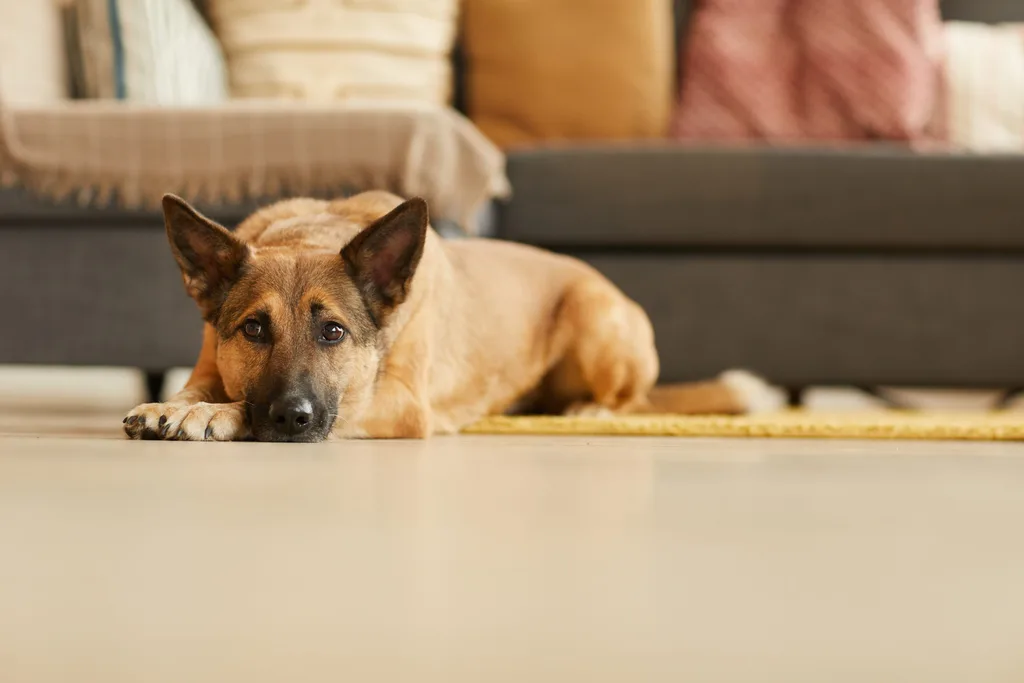
Overnight Boarding for An Anxious Dog
What does stress look like in a dog?
Some of it’s obvious. Pacing back and forth, whining, barking. Some of it you’d miss unless you knew to look.
| Sign | What you might see |
| Pacing | Walking back and forth, can’t settle |
| Vocalizing | Whining, barking, howling |
| Face | Yawning, lip-licking, panting when it’s not hot |
| Eyes | Whites showing, looking away |
| Body | Ears pinned back, tail tucked, freezing up |
The American Kennel Club lists all of these as stress signals. It also makes a point owners don’t always hear: a dog that looks away after being scolded is often showing stress, not guilt.
Why does this matter for boarding? Because the more specific you can be, the better we can read your dog. Telling us “he gets a little nervous” is a start. But if you can say “he yawns a lot when he’s unsure, and thunder gets him pacing,” now our staff knows what they’re looking at when they walk by his run.
Is it separation anxiety or nerves about a new place?
They’re different. Try to figure out which one you’ve got before you book.
Plenty of dogs are just thrown by a new place. Strange smells. Strange noises. Some other dog three runs down who won’t stop barking. Those dogs usually go a bit quiet and careful for a while.
Separation anxiety is a bigger deal. Think about what your dog does when you leave the house. Nonstop barking or howling? Chewed-up doorways, accidents on the floor, trying to get out? Those are the signs the ASPCA points to, and it warns that some dogs try so hard to escape they end up hurt. It ties the problem to big changes in a dog’s life too, like a schedule that suddenly flips or a new person taking care of them.
Does that sound like your dog? Has a neighbor ever mentioned the howling? Then mention it when you call us. Our FAQ says it plainly: we work with dogs of all temperaments on a case-by-case basis, and we ask owners to be honest about behavior. That’s not a trap. It’s how we plan the stay. And in a few cases, it’s how we figure out together that boarding might not be the right fit yet.
Should you ask your vet about anxiety medication?
For a dog who’s really struggling, it’s worth a call to the vet, and not the week before. Weeks before. The ASPCA’s advice is to talk to your veterinarian or a veterinary behaviorist before you give your dog any behavior medication at all.
And give it a test run. Veterinary guidance on this kind of situational anxiety says the medication should be tried out ahead of the stressful day, so your vet can see how it works, whether it causes side effects, and whether the dose is right. Pick a quiet weekend at home. Give the dose. Watch your dog. Much better to learn now that it makes him wobbly than to find out on drop-off morning.
Ended up with a prescription? Then it goes in the original pharmacy bottle, directions on the label. Our staff gives medications as directed for a small fee. Just list it when you reserve.
What can you bring to make the first night easier?
Two things, mainly. Something that smells like home, and the food your dog already eats.
Our FAQ asks owners to bring a comfort item, a blanket or a toy. An old T-shirt you’ve slept in works too. Pick something you won’t miss if it comes home a little worse for wear, since we can’t be responsible for personal items, though we do try to send everything back.
Food matters more than people think with anxious dogs. We keep food on hand, but we’d rather you bring your dog’s regular food, labeled, with written instructions. One less new thing. Our guests eat two meals a day, and if your dog tends to skip breakfast somewhere new, put that on the card so our staff aren’t guessing.
Got two dogs from the same house? They can usually share a kennel if they get along. For some nervous dogs, having their housemate right there is the best comfort item there is.
What happens once your dog is with us?
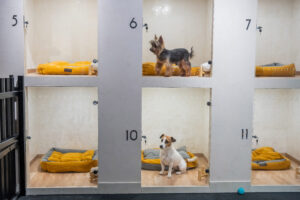
Every dog gets a private indoor suite connected to a covered outdoor run, so they’re not stuck in one small space all day. They can use the outdoor run several times a day, rain or shine.
Inside, we play soothing music around the clock. It helps reduce anxiety, especially for dogs sensitive to new environments, and those are usually the ones who need it most at night. Every guest sleeps on a raised Kuranda bed. And one of our staff lives on site and checks on the dogs overnight, so nobody’s alone in the building until morning.
Want to know how it’s going? Call. We encourage owners to check in during business hours, and you’ll get a straight answer about how your dog is eating, sleeping and settling.
How should you handle pickup?
Low-key. The ASPCA recommends keeping arrivals and departures calm with anxious dogs, and that applies here too. A huge, excited reunion in the lobby can wind up a nervous dog all over again.
Pickups run Monday through Saturday, 8:30 AM to noon, with afternoons and Sundays by appointment. Once you’re home, expect a tired dog. Maybe a thirsty one. What to Expect After Dog Boarding walks through what’s normal in those first couple of days.
Frequently asked questions
Can I tour the kennel with my anxious dog first?
Please do. Your dog gets to sniff around and meet a few of us on a day when nobody’s leaving.
Can my dog bring a toy or blanket?
Sure, bring one. The ratty favorite blanket is perfect. The heirloom quilt, maybe not.
Will you call me if my dog isn’t eating?
Put it on the feeding card and we’ll know what’s normal for your dog. You can also call us during business hours anytime for an update.
Does Highland Kennel take dogs with separation anxiety?
We look at every dog case by case. Be upfront about the behavior when you book so we can plan the stay together.
Planning a stay for a nervous dog? Highland Kennel is at 1424 Maxim Southard Road in Howell. Call 732-364-4443 to set up a tour, or start with our Dog Boarding and Special Needs & Diet pages. You can also check our Vaccination Requirements, read the First-Time Dog Boarding Checklist, or contact us online.